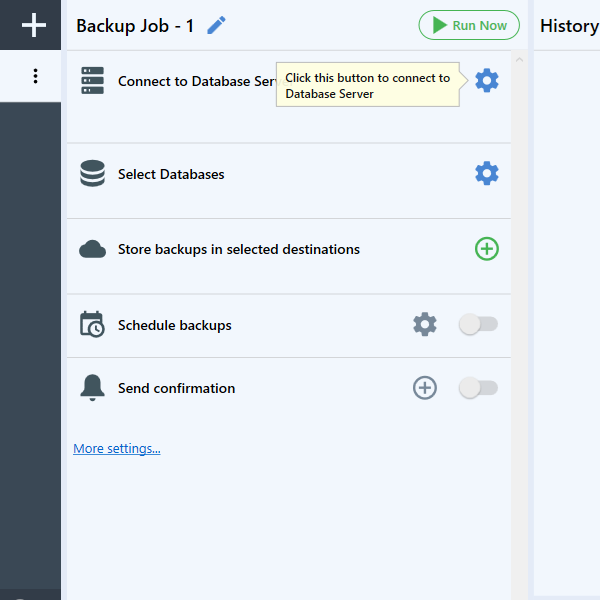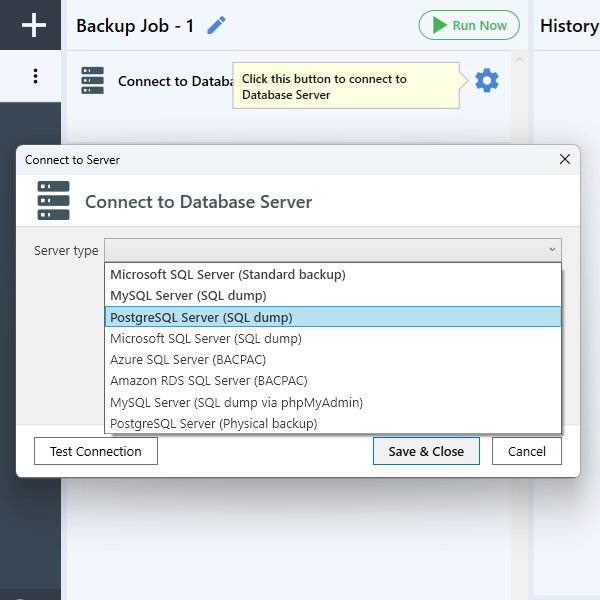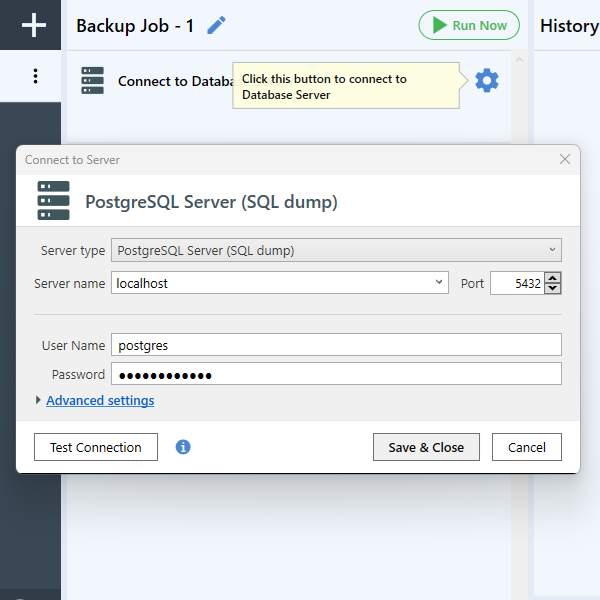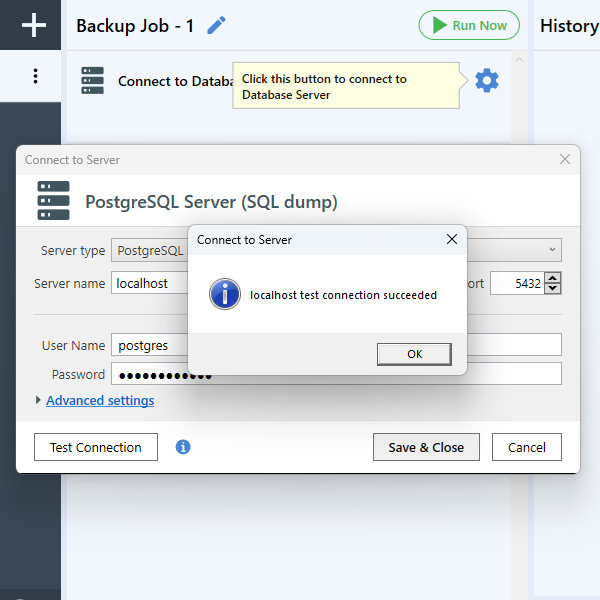


01
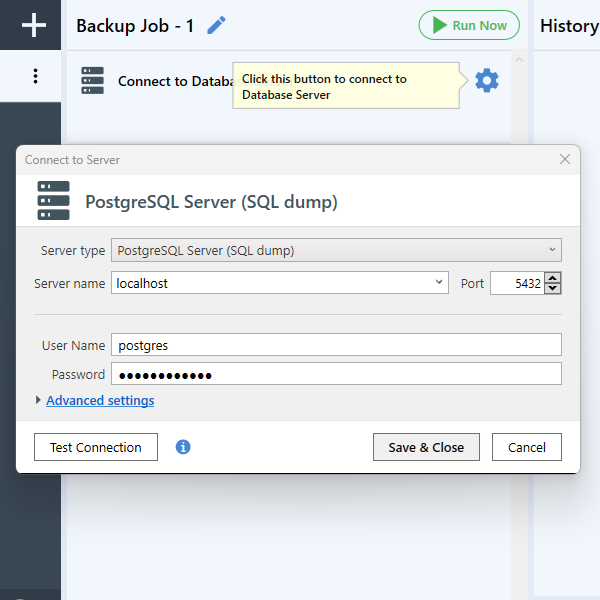
Connect to PostgreSQL
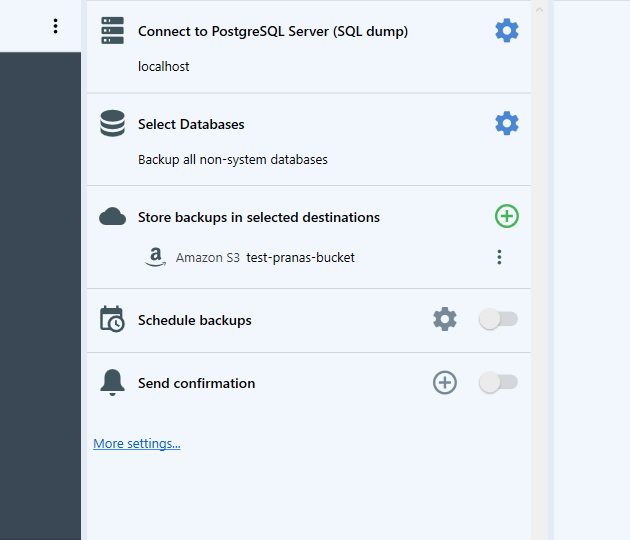
Connect to PostgreSQL with an SQL dump of each database, or a physical backup of the whole cluster.
2 minutes to set up.
SQL dumps of your databases or physical backups of the whole cluster, sent to a folder, FTP or the cloud, with an email after every run.
Protect your data in just a few minutes.
Detailed tutorialConnect to PostgreSQL with an SQL dump of each database, or a physical backup of the whole cluster.
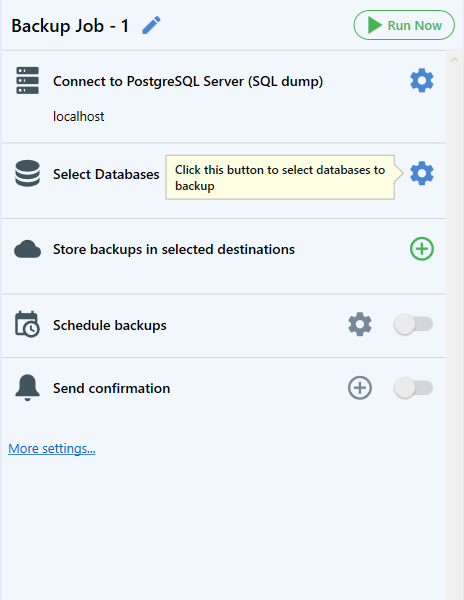
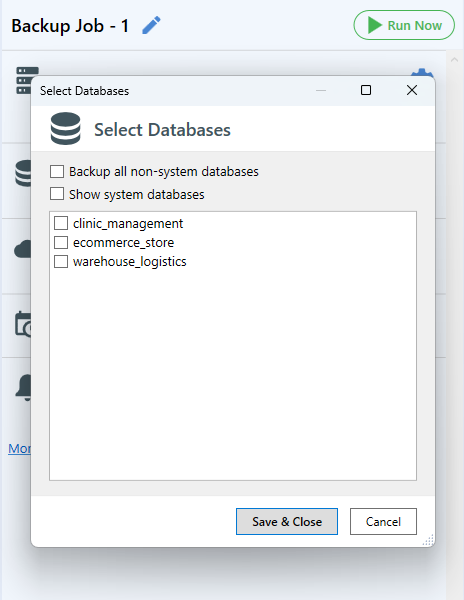
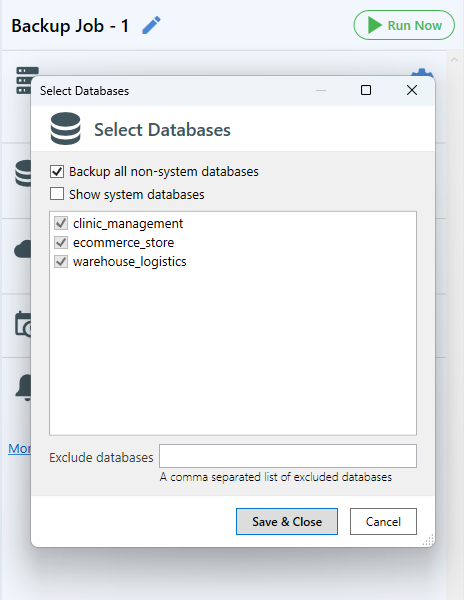
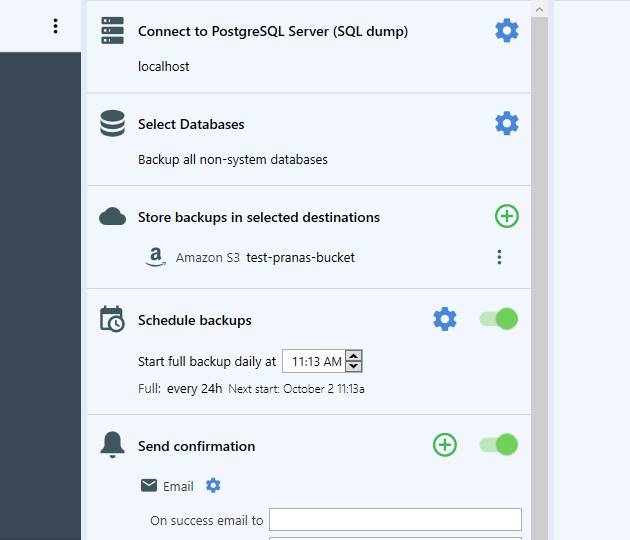
Choose the databases you want to backup. One job can include several databases.
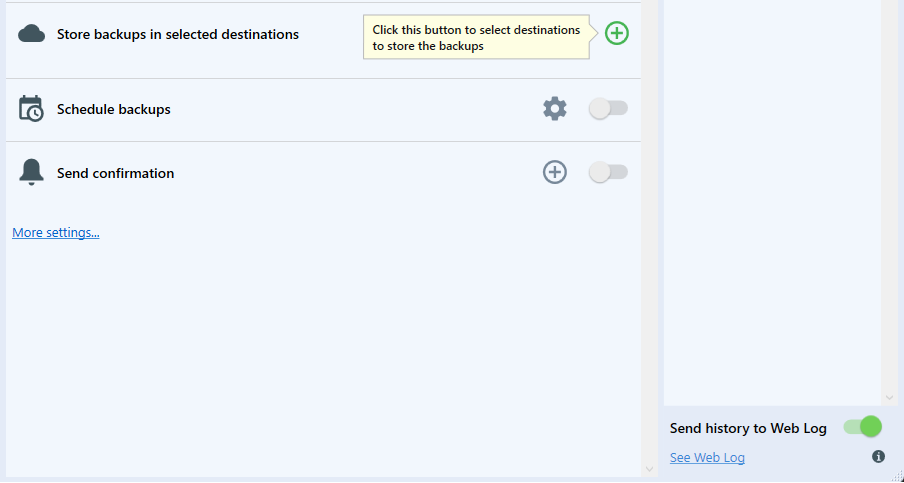
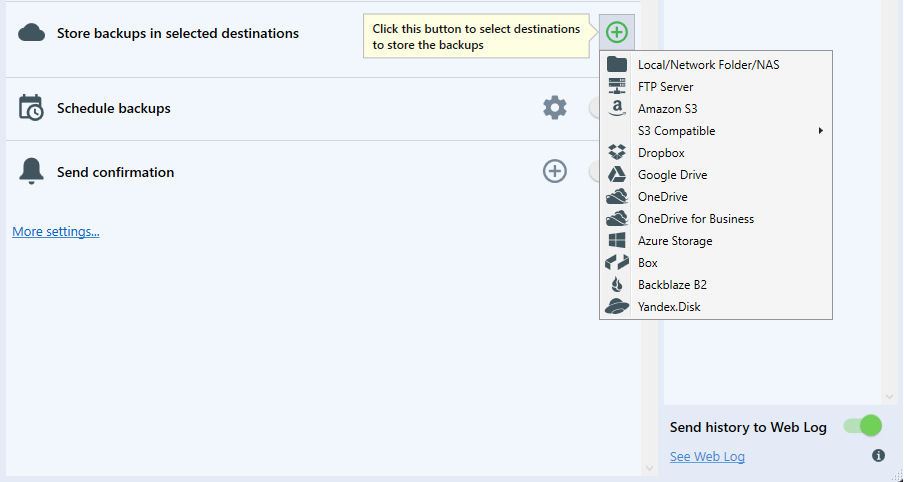
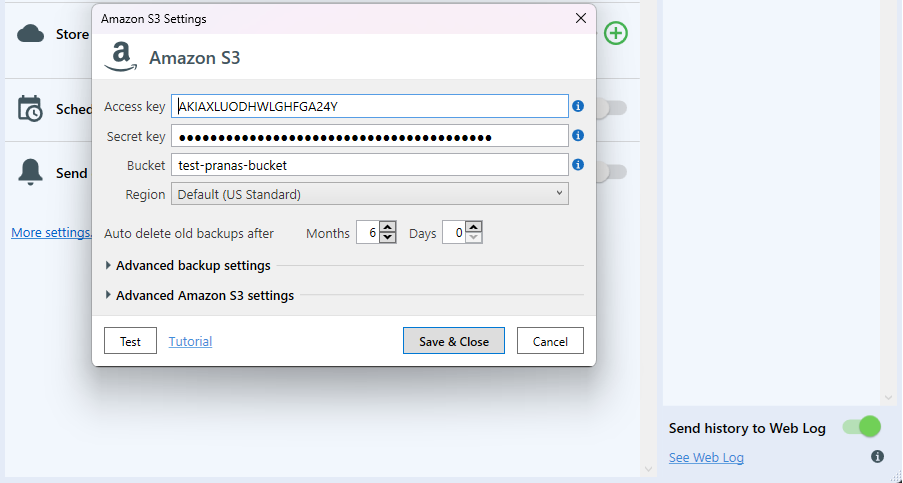
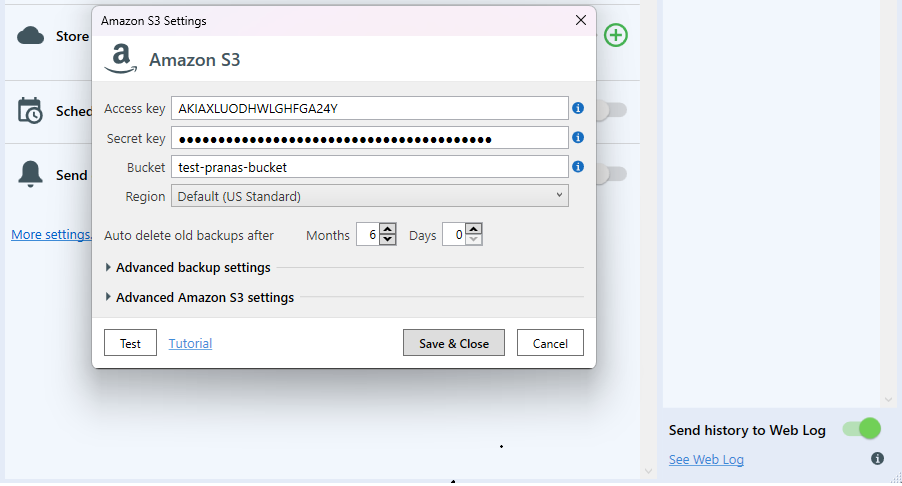
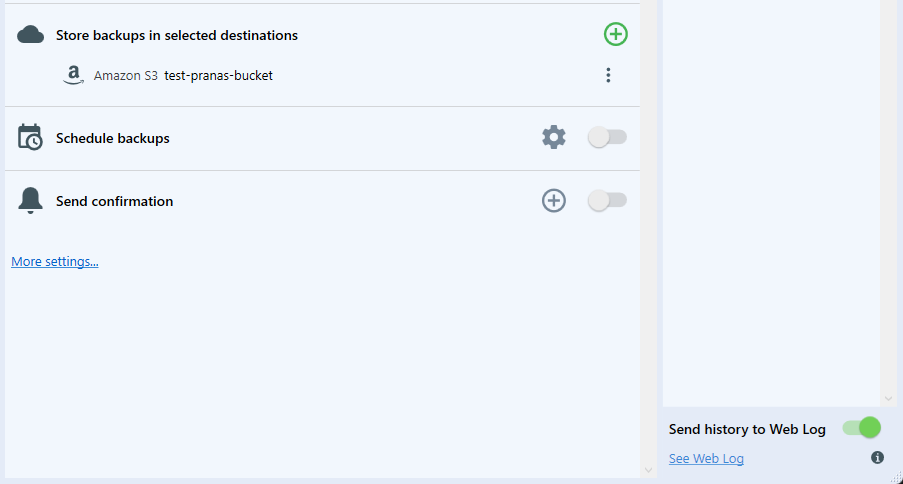
Store backups on local drives, FTP/SFTP, Amazon S3, Microsoft Azure, Google Drive and more.
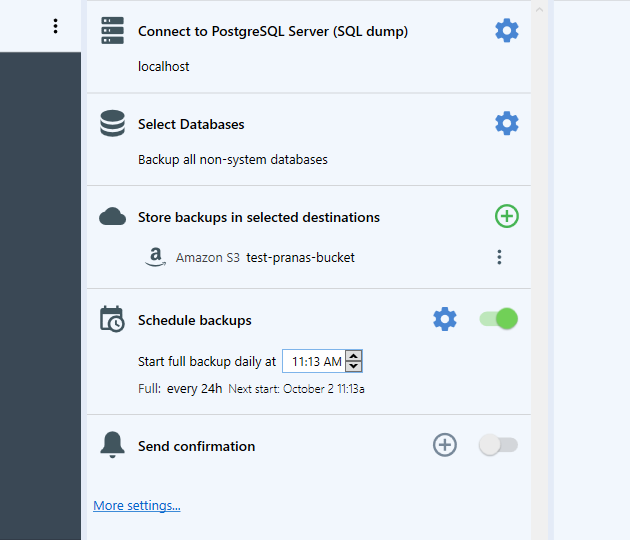
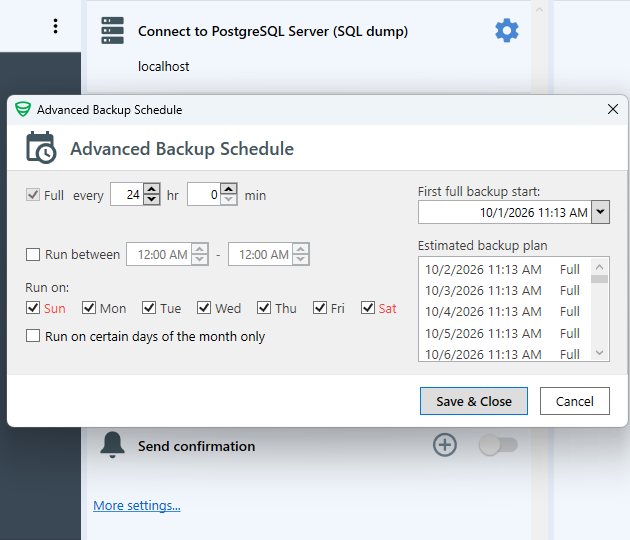
Choose when and how often the job should run. Full and incremental backups.
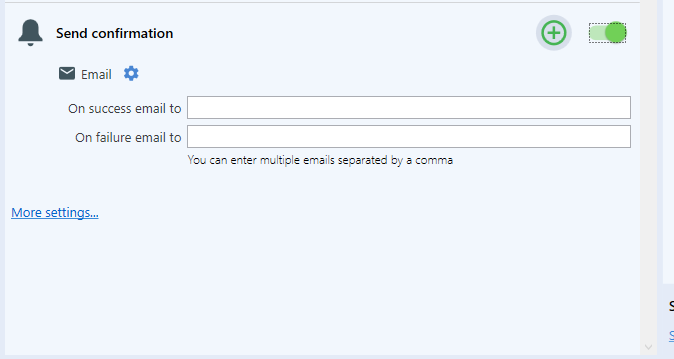
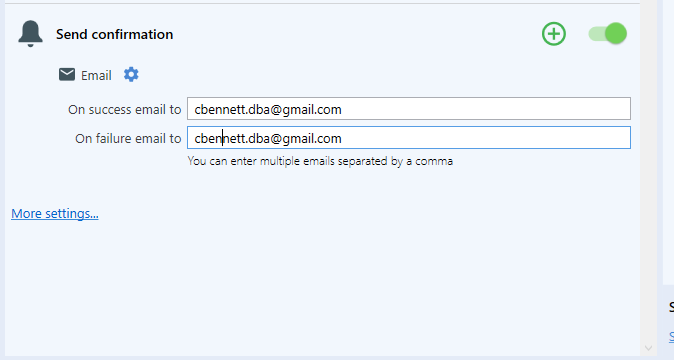
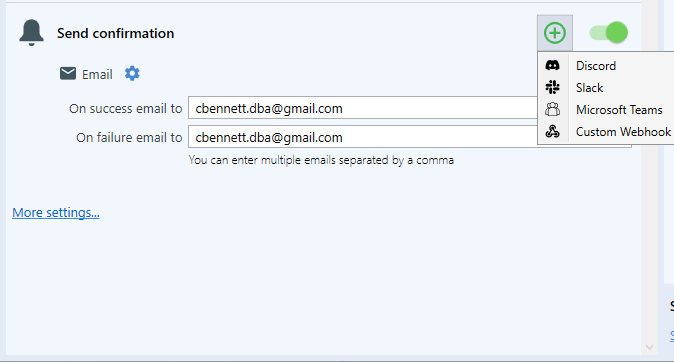
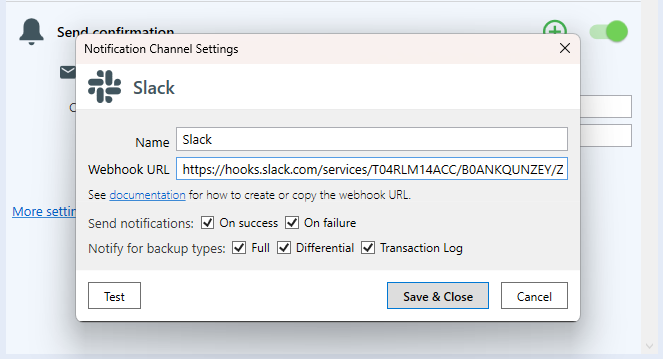
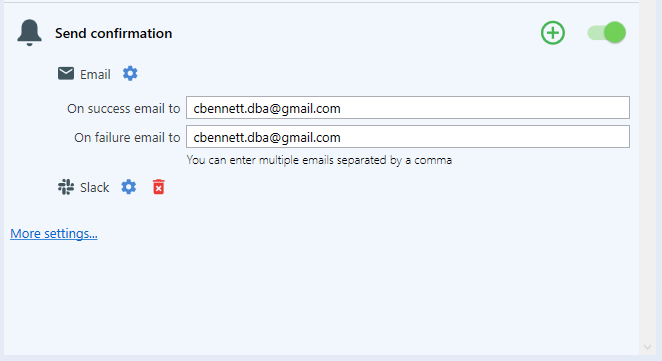
Get notified on success or failure by email, Slack, Teams, Discord or a webhook.
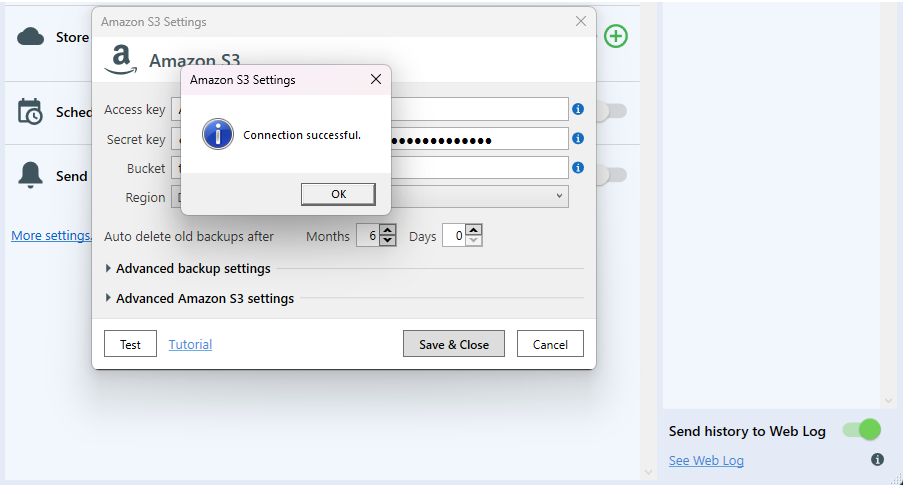
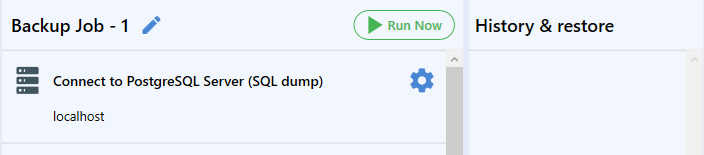
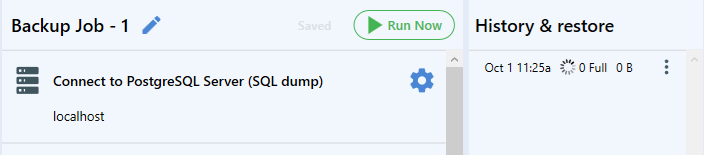
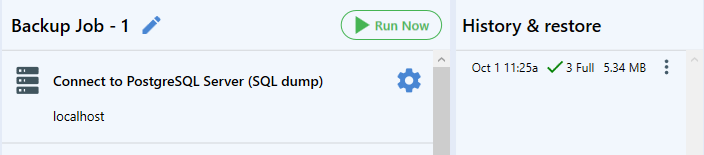
Click Run Now to start your backup job and verify the results.
It runs the standard PostgreSQL tools for you on a schedule and keeps every copy in a folder, on FTP or in the cloud.
A logical backup is an open SQL script, so you can see what was backed up, and it works with remote servers. A physical backup is a transactionally consistent copy of the server, and it can be made only on the same computer.
An incremental physical backup saves only the changes since the previous one. It finishes quickly and keeps the load on the server low. It covers the whole cluster on the same computer.
A backup runs while PostgreSQL stays online. It does not stop the server or slow it down.
Restore from the same window. An SQL script comes back as one job, and a physical backup restores the cluster from the full copy and the incremental copies that follow it.
Point it at your databases, then choose where the backups go. Schedule, compression, encryption, retention and email are all switches on the same form.
Local, remote or cloud-hosted.

Pick one destination or several. Click any of them for the setup steps.
Real numbers. Real results. Real peace of mind.





Start free. Upgrade only when you need more features.
All plans: SQL Server, MySQL & PostgreSQL; remote/Azure SQL/RDS; files & folders; log shipping; unlimited Run Now backups.
View all plansTry risk-free. Get a full refund within 30 days, no questions asked.
Your data and payment information are always safe.
The community forum is open to everyone. Direct email support comes with an active Full-Service subscription, and those emails are answered within one business day.
Contact supportSQLBackupAndFTP is a backup solution for SQL Server, MySQL, and PostgreSQL databases that performs scheduled full, differential, and transaction log backups, supports incremental backups for MySQL and PostgreSQL, backs up files and folders, compresses and encrypts backup files, stores them locally, on a network, FTP/SFTP server, or in the cloud, automatically removes old backups based on retention policies, and sends email notifications on backup success or failure.
SQLBackupAndFTP is made to be simple. While for the majority of users this is a huge advantage, some specific configurations are not handled. You should not use SQLBackupAndFTP if you want to monitor SQL Server performance and schedule backups online in your browser for a large number of servers - SqlBak may be suited better for you.
No. SQLBackupAndFTP is a standalone application: once you have bought a license for a computer, it never expires and you can keep using the version you purchased forever. Only the optional Full-Service subscription renews yearly, and one month of it is included with every license.
Discounts apply automatically at checkout: 15% off from 2 computers, 20% off from 5, and 25% off from 10. The “Professional 1 database” edition is sold in packs of 5, with its own 20% discount starting at 20 computers. Above fifty computers, write to us and we will quote a price.
Yes, for logical backups. They are made with pg_dump and restored with psql or pg_restore, depending on the format. Physical backups use pg_basebackup. The tools come with the application.
Logical backups use the pg_dump formats Plain (.sql), Custom and Tar. Custom is compressed while it is created. A physical backup is a binary copy of the data directory.
Yes, with pg_dump backups: connect over TCP/IP, with SSL if required, or through an SSH tunnel. Physical backups of the whole cluster need SQLBackupAndFTP on the same computer as the server.
A physical backup copies the whole PostgreSQL cluster, not one database. SQLBackupAndFTP must run on the same computer as the server so it can read the data directory. You can schedule full and incremental physical backups; restoring them returns that data directory. Testing the restore is good practice, so you know the backup can be recovered. See how PostgreSQL backups work.